FAZIAPRE, G.Casini and N. Le Neindre
Isospin transport versus neutron preequilibrium in medium-light systems.
- 2 min read
G.Casini, N. LeNeindre, S. Barlini, M. Bini, M. Bruno, A. Chibhi, R. Bougault, M. Cinausero, M. Degerlier, J. Frankland, E. Bonnet, F. Gramegna, A. Kordyasz, T. Kozik , T. Marchi, A Stefanini, G. Pastore, S. Valdre, G Verde, L. Morelli, A. Olmi, M. Parlog, G. Pasquali, G. Poggi, D. Fabris, S. Piantelli, O. Lopez, B. Borderie, M. Vigilante, I. Lombardo, L. Francalanza, D. Dell’Aquila, G. Spadaccini, D. Gruyer, E. Vient
(FAZIA Collaboration)
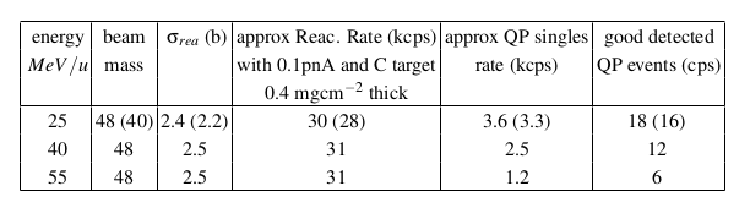
We aim at investigating the persistence, with bombarding energy, of the neutron content of excited transient quasi-projectiles (QP) formed in semiperipheral collisions at Fermi energies. Many experiments studied the isospin flow during heavy-ion collisions because this process is also ruled by the details of the E_SYM which is only partly known far from stability and ground-state conditions. However, for a given nuclear system, one expects that the number of neutrons which can participate to the isospin transport during the interaction depend on the ingoing relative velocity; indeed, more and more free neutrons can be fastly removed by the colliding system with increasing relative velocity. The amount of rapidly emitted neutrons is expected also to depend on the neutron abundances of the reacting partners; towards the n-drip line, the neutron density profiles extend more and the separation energy gets lower so that free neutrons can be more easily removed on short timescale. We observe that fast neutron emissions can limit the neutron reservoir available to approach the n-drip line in experiments with neutron rich beams.
- Tags:
- Fazia
- Lns
- Experiment
- Faziapre